The Complete Checklist for Researching a National Anthem's History
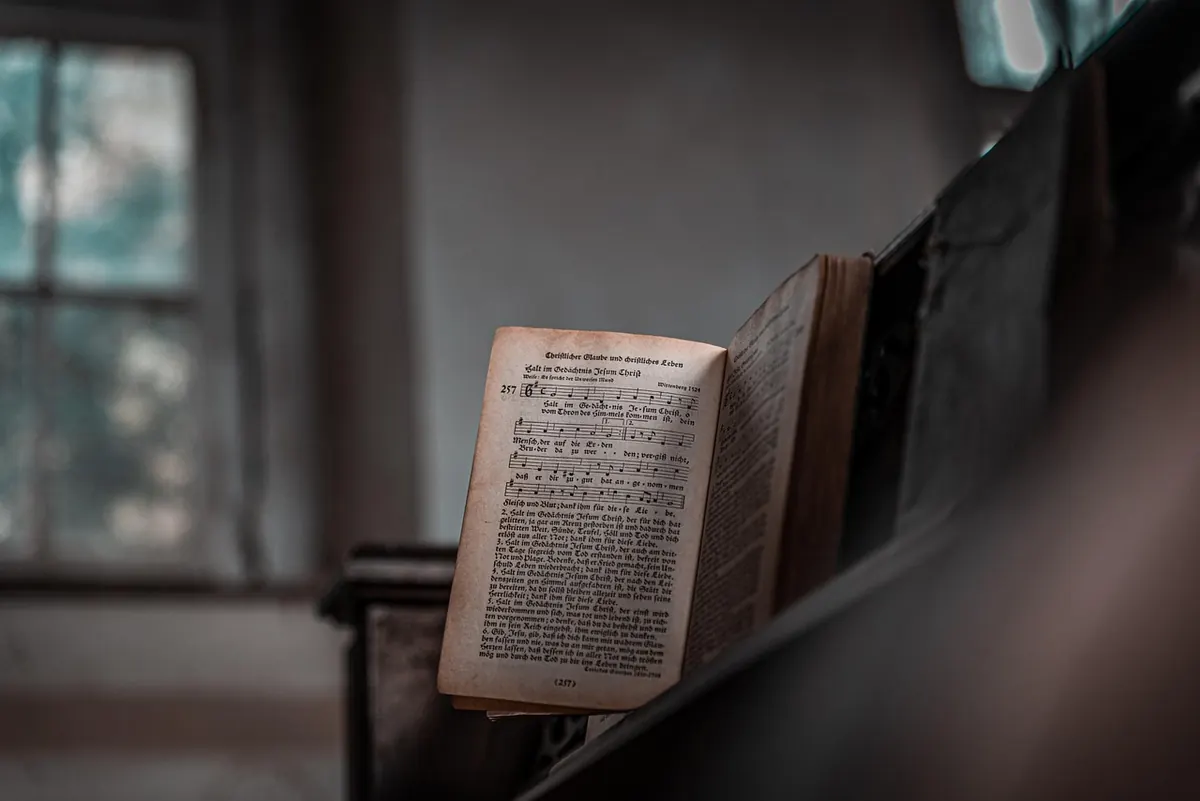
Every national anthem arrives with a story attached, and the story is usually better travelled than the facts. A tune hummed at a cup final, a poem dashed off in a moment of crisis, a composer who died before hearing it sung in public — these details get repeated in school textbooks and matchday programmes until nobody remembers where they came from. Checking them properly is a job of work, but it is a satisfying one, and it does not require a research library card. It requires patience, a note of where each claim came from, and the willingness to write "we don't know" when the evidence runs out.
The order below tends to save the most time. Start with the official record, move to the text and the music, then date the events. Only after that should you decide what you are willing to state as fact.
Start with the official record, not the popular one
Begin at the state end of the trail. Government gazettes, parliamentary records and national archives are dull reading and enormously useful, because they tell you what was actually decided and when. A surprising number of anthems were never formally adopted at all. God Save the King has no founding statute; it became the national anthem through use, which is why every claim about its composer has to be treated with suspicion.
Watch the vocabulary, too. A country may have a national anthem, a royal anthem and a presidential anthem as separate pieces, and journalists frequently confuse them. Note whether a song is official, semi-official or simply customary — that single distinction shapes everything else you write.
Pin down the text before you chase the tune
Anthems are edited constantly. Verses get dropped, dialect spellings get modernised, gendered language is revised, and translations drift. If you quote a line, you need to know which version you are quoting and who authorised it.
Questions to answer about the words
- How many verses did the original have, and how many are sung now?
- Which verse is treated as the official one, and by whom?
- Is the widely sung text a translation? If so, by whom and for what occasion?
- Have lines been altered for political reasons — a monarch's name, a border, a republic?
Advance Australia Fair is a good illustration: written by Peter Dodds McCormick in 1878, it was shortened and adjusted on adoption in 1984, and further amended later. Quote the 1878 text and you are quoting something Australians have not sung for decades.
Untangle the credit line
Songs rarely have one author. Separate the lyricist from the composer, then look for the arranger, the translator and the person who wrote the harmonisation everyone actually hears. A national anthem performed by a military band is often a nineteenth- or twentieth-century arrangement of a much older tune.
Where attribution is uncertain, say so plainly. The melody of God Save the King has been credited to several people on no firm evidence, and the words of Japan's Kimigayo come from a much older poem than the music. Sheet music title pages, hymnals, copyright registers and performing rights databases are the best places to test a name; commemorative websites and anniversary newspaper features are the worst.
Three dates that are rarely the same
Most confusion in anthem history comes from collapsing three separate events into one. Record each of them with its own source:
- When the words or music were written. La Marseillaise was written by Claude Joseph Rouget de Lisle in 1792; the lyrics of The Star-Spangled Banner date from 1814, set to an older British tune by John Stafford Smith.
- When it was first performed in public. A private performance for a dining club is not the same as a première in a theatre, and the distinction matters.
- When it became the national anthem. France declared La Marseillaise a national song in 1795. The United States did not make The Star-Spangled Banner official until 1931. Germany adopted the Deutschlandlied in 1922 and reduced it to the third verse in 1991.
Keeping those three dates apart prevents most of the errors that circulate online.
Find the first performance if you possibly can
Newspaper archives are the researcher's workhorse here: local papers of the period, theatre playbills, concert programmes, and the minutes of the society, regiment or club that commissioned the work. Look for names, venues and dates, then check whether a later commemorative event has quietly rewritten the record. Anniversary celebrations are excellent at creating "first performances" that never happened.
Ask not only "when was it written?" but "when did it become the anthem?" The gap between the two is where the history usually lives.
Cross-check and grade what you have found
Sort your sources by weight and be honest about the weak ones. Primary material — manuscripts, first editions, official records — carries the argument. Reference works and scholarly monographs are solid second-line support. Then come recordings, sleeve notes and newspaper features, useful for leads but not for proof. Way down the list sits the uncited fact repeated across dozens of websites, which is a sign of copying rather than research.
Two habits help. First, chase every claim back to the earliest source you can reach, and note where the trail goes cold. Second, date-stamp your notes; archive catalogues and official pages are revised, and you will want to know which version you read.
Keep a clean research file
Before you write a word, assemble five short lines: the official title, the version of the text you are using, the lyrics and music credits with any uncertainty flagged, the three key dates, and a list of what remains unproven. Add the sources you used and the date you consulted them.
That file does two things. It stops you repeating a myth you half-remember, and it gives you something to hand over when a reader asks the one question every anthem article attracts: how do you know? If you can answer that, the piece stands up — whether the story turned out to be true, disputed, or gloriously unresolved.
Photo: matthiaskost / Pixabay