How to Choose a National Anthem for a Wedding or Civil Ceremony
There is a particular hush just before a ceremony begins, when the guest chatter fades and everyone turns towards the door. Music fills that silence, and it does more work than most people expect. A national anthem can be a genuinely moving choice — a nod to heritage, a moment of shared recognition, a piece that half the room already knows by heart. Handled carelessly, though, it can feel like a football match, a political gesture, or a cue for a confused shuffle of standing and sitting. The difference is almost always in the planning.
What an anthem gives you that other music does not
Anthems are short, sturdy and instantly familiar. They rarely run beyond two minutes, they work beautifully on a single instrument or a full band, and they carry a weight that a pop song cannot quite match. That combination makes them unusually flexible: they can open a ceremony, cover a practical pause, or send everyone out on a high.
They also come with meaning attached. Some guests will hear home. Some will hear a state occasion. A few may hear politics they would rather not think about on your wedding day. None of that rules an anthem out — it simply means the choice deserves a moment's thought rather than a last-minute download the night before.
Pick the moment before you pick the music
Where the anthem sits in the ceremony changes everything about how it should be performed. Start here, and the arrangement usually sorts itself out.
- As guests are seated. An instrumental version works well here. It sets a tone while people are still finding chairs, and nobody has to decide whether to stand.
- As the processional. Powerful, but it asks guests to stand for a second time in quick succession, and the opening bars may be the only ones anyone hears. Trim it to a single verse or a short instrumental passage.
- During the signing of the register or the pause in proceedings. This is the friendliest slot. It fills a natural lull, allows a full verse or two, and lets a soloist or small ensemble shine.
- As the recessional. Choose the brisk, celebratory section rather than the solemn opening. Tempo does the work: people are walking, not standing to attention.
A word of warning about the walk down the aisle. If your guests have been told to stand for an anthem and are then asked to stay standing for the entrance itself, the moment can lose its shape. If you want both, leave a clear gap of a verse of something else in between.
One country or two?
For couples with different nationalities, playing both anthems is an obvious and often lovely idea. It also doubles the running time, so think about format. One workable approach is an instrumental arrangement that weaves a single verse of each together, played by the same musicians so the transition feels deliberate rather than stitched on.
If you play them separately, decide the order in advance and keep it consistent in the printed order of service. Do not feel obliged to give both anthems equal billing if one means far more to you than the other. A short instrumental nod to a second country is often more graceful than a full second anthem that half the room does not recognise.
If families are sensitive about the pairing, talk it through well before the day. This is one of those decisions where a five-minute conversation in March prevents a strained atmosphere in September.
Performance choices that matter more than the anthem itself
Most disappointing anthem moments are not the fault of the piece. They come from tempo, key or length.
Tempo and key
Anthems are often written in stately, march-like keys. On a solo piano in a small room, that can sound plodding. Ask your musicians to try a slightly brighter tempo and a key that suits the singer or the instrument, then listen to it live in the actual space if you can. Rooms swallow sound in unpredictable ways.
Instrumental or sung
Instrumental versions avoid every question about lyrics, language and whether guests know the second verse. If you want singing, decide who: a soloist, a small choir, or the whole congregation. Congregational singing only works if the words are printed and someone is confident enough to lead it.
Length
Cut it down. A single verse, or ninety seconds of instrumental, is almost always more effective than the full piece. Nobody has ever complained that a wedding anthem was too short.
Respect, rules and the people who know them
An anthem is not just music. It is a piece of national symbolism, and it carries customs around standing, hats and ceremony that vary from country to country. If you are using another nation's anthem, and especially if you are doing so in any official capacity, the relevant embassy or consulate can advise on how it is normally treated. It is also worth checking whether any recording or arrangement you plan to use is cleared for public performance — most venues hold the licences for recorded music, but ask.
There is a practical point for civil ceremonies too. In England and Wales, civil marriage ceremonies must be entirely secular in content, which means hymns, prayers and religious readings are not permitted. A national anthem that includes lines addressed to God may fall into a grey area, and different registration services interpret this in different ways. Rules differ elsewhere in the UK and in Ireland, so the only reliable answer comes from the registrar or celebrant who will conduct your ceremony. Ask early — ideally when you book the date, not when you submit your music choices.
A short checklist before you commit
- Choose the slot in the ceremony, then the piece.
- Agree a trimmed length and write it into the running order.
- Confirm the arrangement: instruments, voices, key and tempo.
- Check the anthem is acceptable with your registrar, celebrant or minister.
- Ask the venue about sound equipment, licences and rehearsal access.
- Decide whether guests stand, and tell them — in the order of service, or by a discreet word from the ushers.
- Rehearse it in the space, at volume, with the doors open.
Rehearse it, then let it be simple
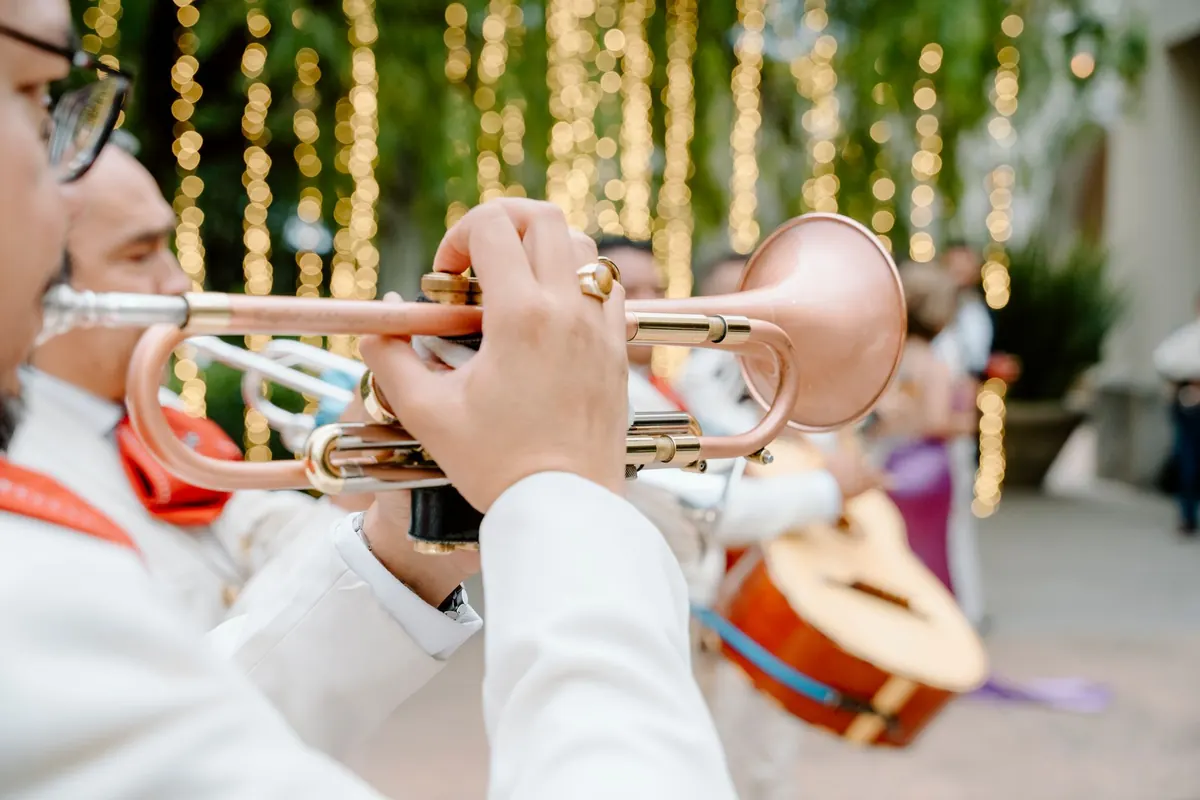
The best anthem moments in weddings tend to be understated: a single trumpet, a piano and one verse, ending before anyone has had time to feel awkward. Tell your musicians what the moment means to you, give them clear timings, and then trust them. If a detail feels fussy in rehearsal, it will feel worse on the day — strip it back.
And if your registrar or celebrant raises a concern about a particular anthem, take it seriously rather than treating it as an obstacle. There are hundreds of alternatives that will move a room just as much, and the last thing you want is a debate about protocol running alongside your vows.
Photo: Brunxs / Pexels