Rock Anthems for Beginners: 10 Songs That Defined the Genre
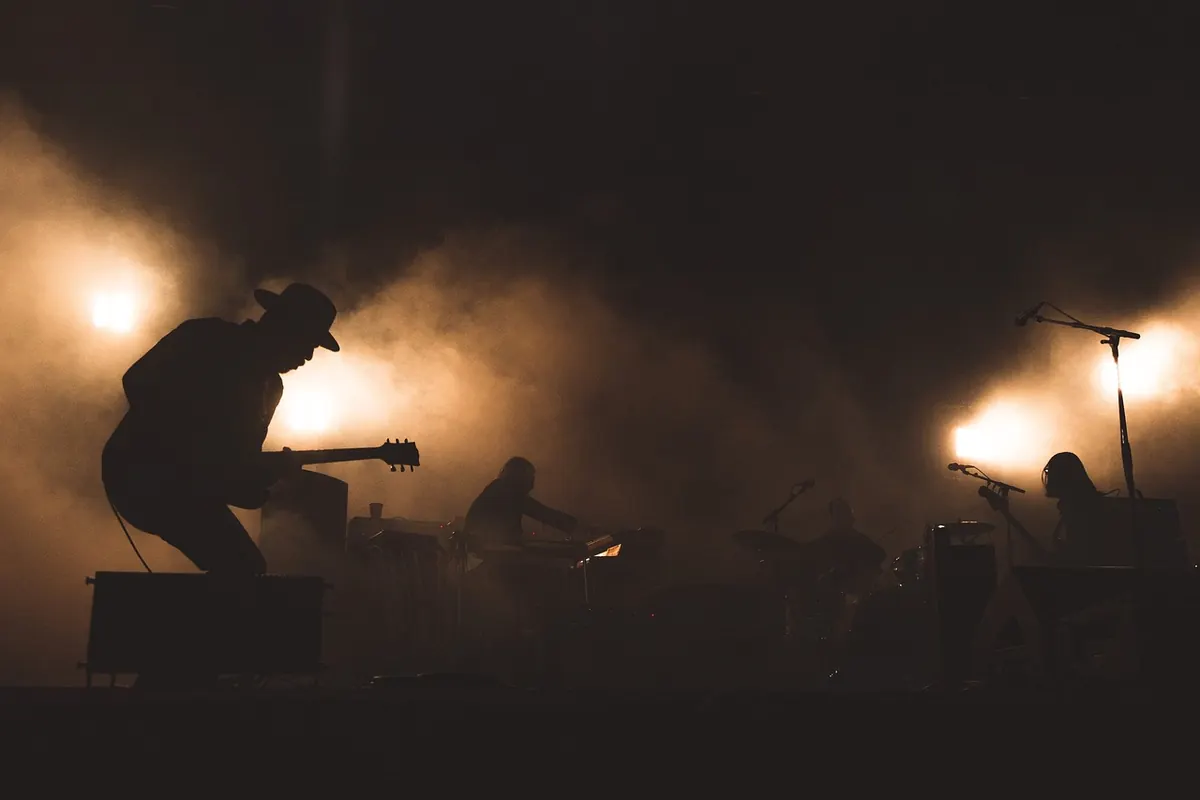
A rock anthem is not simply a loud song. It is a song built so that a crowd can take it over. Something in the opening riff tells you what is coming, the chorus arrives like a door being kicked open, and by the second time round you already know the words without having tried to learn them. That is why certain records outlive the audiences they were written for, and why they still work at weddings, in football grounds and in the last twenty minutes of a house party.
If you are new to rock, the sheer volume of "essential" lists can be paralysing. So this is a route in rather than a verdict: what actually makes these songs work, ten records that show the range of the form, and some practical advice on how to listen so they land properly.
What Makes a Rock Anthem Stick
Anthems are built, not stumbled upon. The ingredients vary, but most of them share a few reliable features.
A chorus you can join in two goes
Simple words, few of them, and a melody that sits where untrained voices can reach. Journey's "Don't Stop Believin'" spends most of its running time building, then delivers a chorus you feel you have known for years. Nobody needs a lyric sheet, and that is the point. If a chorus requires vocal technique, it will not be sung back at a gig.
A riff that works as a signal
Think of the first few seconds of "Back in Black" or "Whole Lotta Love". You know what is coming before the singer opens his mouth. That instant recognition is what turns a song into a room-wide event: everyone hears the same cue at the same moment and reacts together.
Space, then release
It is tempting to assume anthems are all noise. In practice, most of them are about restraint. "We Will Rock You" is a stomp, a clap and a chant, and its power comes from how little is happening. The quiet verse before the huge chorus is one of rock's oldest tricks, and it still works because the contrast does the emotional heavy lifting.
Ten Songs That Show What the Genre Can Do
These ten span six decades. Played in this order, they give you a rough tour of how the form developed, from mod-era confrontation to twenty-first-century festival singalongs.
- The Who – "My Generation" (1965). Short, strange and furious, with a stuttered vocal and a bass solo. Proof that an anthem does not need to be pretty.
- Led Zeppelin – "Whole Lotta Love" (1969). A filthy riff, a bizarre middle section, then the riff again. Shows how much oddness an anthem can carry.
- Bruce Springsteen – "Born to Run" (1975). A wall of guitars and glockenspiel, all of it about escape and friendship. Listen to how the drums push the whole thing forward.
- Queen – "We Will Rock You" (1977). No conventional chorus at all, just a beat and a crowd that was clearly imagined before it existed.
- AC/DC – "Back in Black" (1980). A riff that behaves like a handshake. Direct, unhurried and impossible to ruin.
- Journey – "Don't Stop Believin'" (1981). Piano, a long build, a chorus that arrives late and stays. The blueprint for the power ballad.
- Bon Jovi – "Livin' on a Prayer" (1986). A talk box, a working-life story and a final chorus that lifts a step. Unashamed, and all the better for it.
- Guns N' Roses – "Sweet Child o' Mine" (1987). A famous guitar line, a lot of space, and a singer who sounds like he is grinning. Get to the last minute.
- Oasis – "Don't Look Back in Anger" (1995). The British one. Sung at football matches, in pubs and at the end of long nights, with a chorus built for people who cannot sing.
- The Killers – "Mr Brightside" (2004). Still filling dance floors two decades on, and a useful reminder that the anthem never stopped being written.
How to Listen So the Songs Land
Skipping has become the default setting, and anthems suffer for it. There is nothing complicated about listening well, but a few habits make a real difference.
- Listen once without doing anything else. No scrolling, no tidying the kitchen. Three minutes is not a long commitment.
- Use the best speaker or headphones you have. A phone speaker hides the bass and the drums, which is half the point.
- Play it twice in a row. Anthems are designed to be repeated, and the second listen is usually the one that gets you.
- Try the live version. A crowd changes a song. Hearing thousands of people take over the chorus explains the appeal faster than any description.
- Follow the song, not the playlist. Shuffle flattens everything into background noise. Play one record at a time.
If a song does not grab you, leave it and come back in a year. Taste moves slowly, and there is no prize for liking something at the first attempt.
Why the Live Version Matters
An anthem is a two-way arrangement. The band plays the riff, the crowd answers, and the song becomes something neither party could produce alone. That is why "Don't Look Back in Anger" can be sung by a stadium with the band barely audible, and why "We Will Rock You" survives without most of the instruments it was recorded with.
You do not have to go to a stadium to hear this. Search for a live recording of any song on the list, ideally one with an audible crowd, and listen to what happens after the second chorus. The song usually gets louder, but the crowd gets louder faster.
Building Your First Playlist
Keep it short. A twenty-song playlist you actually play from start to finish beats a hundred-song one you scroll past. Pick one song per band so you are hearing different voices, span a few decades so you notice how production changes, and put the biggest singalongs at the end where they belong.
Order matters, too. Open with something instant, such as "Back in Black", so you are on board within ten seconds. Put the slower builds in the middle, then finish with the ones everybody knows. Leave the playlist alone for a week and come back to it; you will hear things you missed the first time.
Start Loud, Start Now
Pick three songs from the list, find a decent speaker, and play them end to end tonight without touching your phone. Notice the moment each chorus arrives and how the band gets you there. When you have done that once, you will hear the pattern in songs you have never encountered before, and the next hundred will be easier to find.
Photo: StockSnap / Pixabay